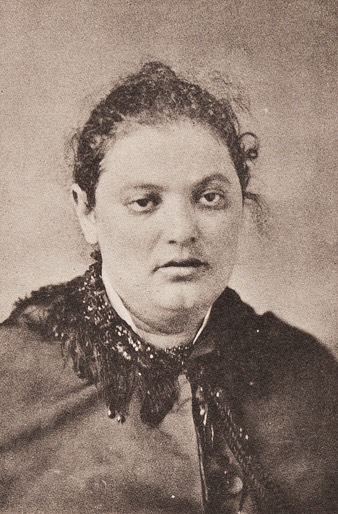
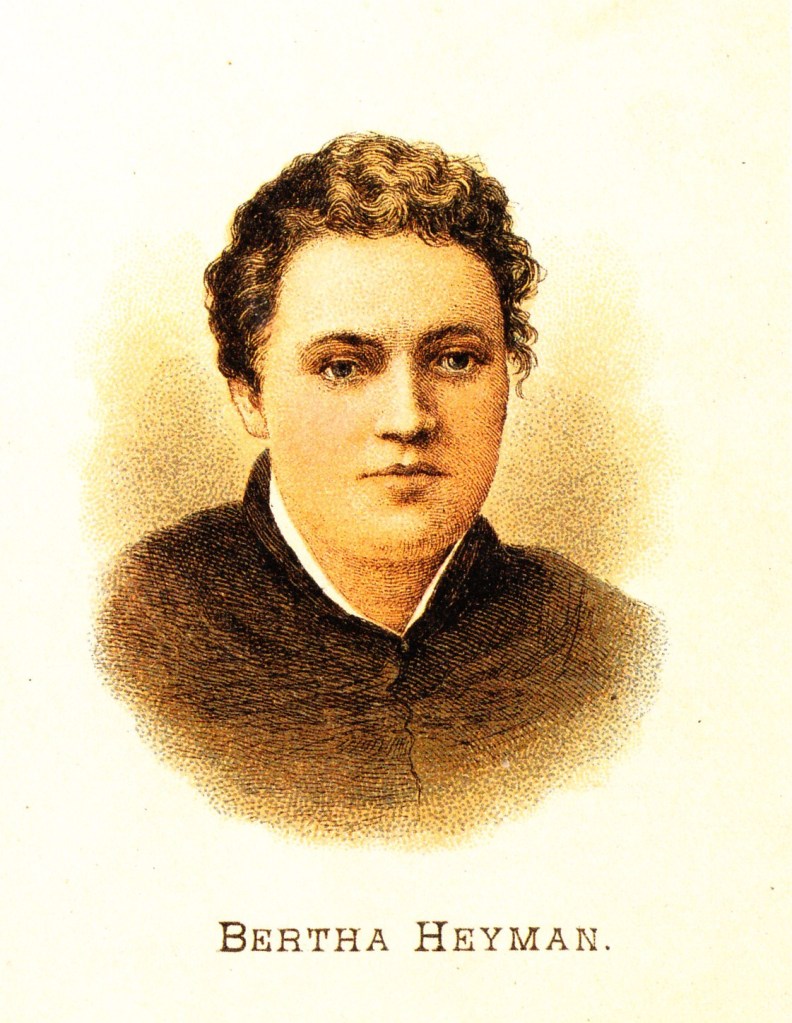
Bertha Heyman had a useful explanation for being short of cash: she was enormously wealthy. Her money was simply out of reach for the moment. A loan would put matters right, and the helpful lender could expect a handsome reward.
It was a proposition she persuaded people to accept more than once. A grand hotel, attentive servants, and talk of influential friends helped make the story convincing. The apparent evidence of prosperity encouraged a dangerous assumption: a woman who lived like this must be able to repay her debts. [1, 2]
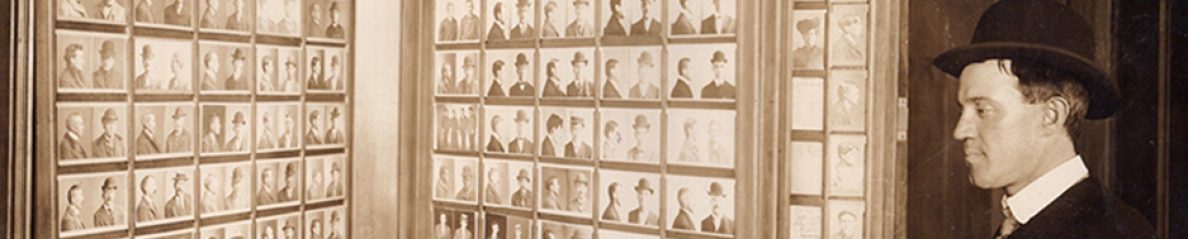
Known as the Confidence Queen, Bertha became a familiar figure in nineteenth-century crime reporting. New York police inspector Thomas Byrnes included her in his 1886 book, Professional Criminals of America. Among the identifying details in his description was a revealing assessment: she was an excellent talker. [1]
Born Bertha Schlesinger in Prussia around the early 1850s, she left an uncertain account of her beginnings. Byrnes placed her arrival in America in 1878, but later research identifies an earlier marriage, in 1870. Accounts also differ over aspects of her marriages. She was associated with Friedrich Kerkow, whose surname appears in several spellings, and later John Heyman. By 1880, her activities were attracting attention in New York. [1, 3]
One of her victims was E. T. Perrin, a railway sleeping-car conductor she met while traveling from Chicago. Bertha offered him an apparently splendid opportunity: managing her estate. According to accounts of the affair, Perrin gave up his railway job. Before he could begin his new duties, however, his prospective employer needed money. He supplied it. Byrnes recorded a lawsuit in September 1880 involving $1,035 obtained from Perrin by false pretenses. The promised position had become an expensive disappointment. [1, 2]
Bertha’s difficulties soon extended across the Canadian border. Byrnes recorded her arrest in London, Ontario, in February 1881, alongside a man identified as Dr. J. E. Cooms. They were accused of defrauding a Montreal businessman. Back in New York, further prosecutions and prison sentences followed. [1]
Even imprisonment failed to bring her activities to a halt. Reports described her obtaining money from Charles Karpe while she was confined on Blackwell’s Island. She claimed that a strongbox containing valuable property could be recovered if certain expenses were paid. Once again, a fortune supposedly existed, but someone else had to supply the ready cash. Karpe repeatedly advanced money and was left impoverished. [2]
Newspaper descriptions of Bertha often dwelled on her weight and appearance. Reporters seemed puzzled that a woman they considered unattractive could persuade men to part with money. Their fixation obscured the more interesting question: how did she make an improbable story seem credible? The accounts suggest that confidence, social introductions, and a convincing display of wealth mattered greatly. (If this reminds you of a recent con woman portrayed in a Netflix series, you’re not alone.) [2, 4]
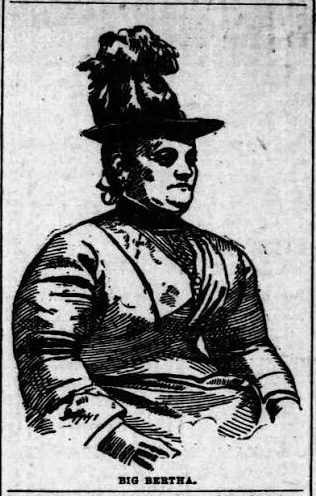
In 1888, she appeared in San Francisco as Bertha Stanley, accompanied by a younger man she introduced as her son, Willie. Presenting herself as a wealthy widow who wished to marry within her Jewish faith, she sought help from Rabbi A. J. Messing. Through him she met Abraham Gruhn, who became her suitor. Willie obtained $500 from Gruhn, supposedly to overcome his objections to the marriage. Cash and jewelry figured in the subsequent allegations. Bertha and Willie departed; detectives eventually found them in Texas and brought them back to California. Bertha was acquitted, while Willie was convicted. [4]
The publicity offered Bertha another way to earn money. She went on the stage, where audiences could see the woman whose exploits had filled the newspapers. Later accounts place her in western theatrical enterprises, including establishments in Spokane and Butte. She was reported to have died in Chicago in 1901. [3, 4]
Her story has an unsettling appeal. The performances were bold, and her ability to begin again was remarkable. But the losses were real. Perrin had surrendered a job; Karpe had surrendered money he could not afford to lose. Behind the entertaining nickname were people who had believed her—and paid for it.
Sources
1. Thomas Byrnes, Professional Criminals of America (1886), pp. 200–201. Opening portion transcribed in “#122 Bertha Heyman,” Professional Criminals of America (Revised). Digitized edition.
2. Geri Walton, “Bertha Heyman: ‘Big Bertha’ or the ‘Confidence Queen’”, September 13, 2021. Includes quotations and references to contemporary newspaper reports.
3. “#122 Bertha Heyman,” Professional Criminals of America (Revised), April 13, 2018, updated June 2, 2023. Used for the early-life discrepancies and later theatrical career.
4. Sabrina Imbler, “The Prussian Grifter Who Swindled Her Way to Her Own One-Woman Show,” Atlas Obscura, May 10, 2019.


How wonderful to see a new post from you, Shayne!
LikeLike
Thanks Liz! It’s good to be back!
LikeLiked by 1 person
You’re welcome, Shayne!
LikeLike
Hi Shayne, welcome back to blogging! The scam really hasn’t changed much over the years, but it had to take some talent to do it face-to-face vs. on the internet or over the phone.
LikeLike
No phones, no internet, nothing but letters and telegrams! It’s hard to imagine, isn’t it? But also no way to verify who anyone was, which allowed the con artists to have lots of fun! It’s good to be back!
LikeLiked by 1 person